Think your septic tank just stores waste?
Most people think a septic tank is just a buried container that holds sewage until a lorry comes to pump it out. That's how old concrete tanks work — and it's expensive, smelly, and bad for the ground beneath your home.
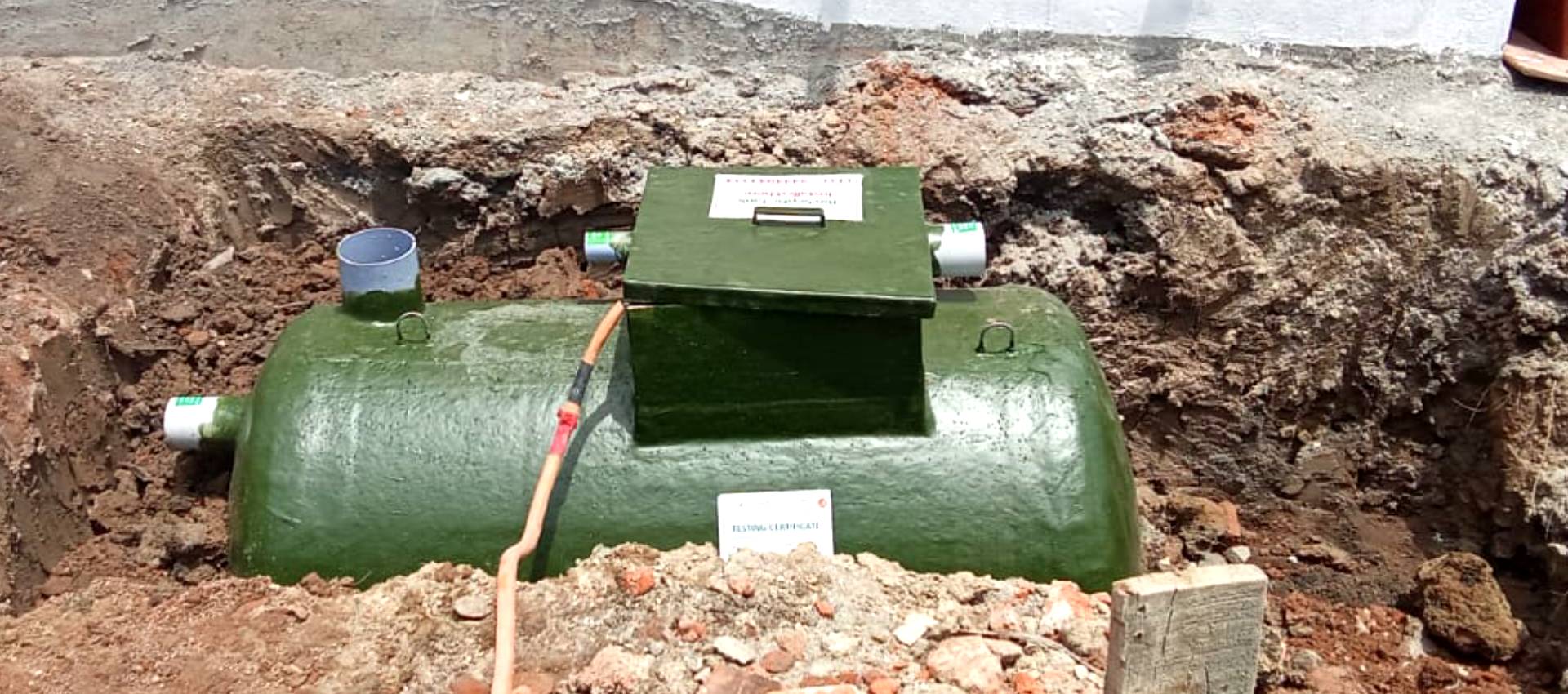
A Bio Septic FRP Tank is completely different. It doesn't just store waste — it treats and converts it, using naturally occurring bacteria inside the tank. By the time anything leaves the tank, it is clean, treated water — safe to recharge back into the ground.
Think of it like your own private, underground water treatment plant. No lorry. No smell. No maintenance bills. Just a one-time installation that quietly works for 20+ years.
- Zero Lorry Pump-outs
- 100% Odourless Process
- Ground Recharge Safe
- 20+ Years Durable FRP
Nature's own cleaning crew, sealed inside a tank
Billions of anaerobic bacteria live inside your GGBE tank. When waste enters, these bacteria get to work immediately — breaking down solids, eliminating pathogens, and converting everything into treated effluent water. It's the same process nature uses in soil, just engineered to happen faster and more completely inside a durable FRP shell.
5-Stage Treatment, Zero Effort
Every litre of waste that enters the tank passes through five specially designed compartments before leaving as clean water. Here's exactly what happens at each stage — in plain terms.
Polygrass Filtering
Compartment 1. Polygrass lining catches and holds larger solid particles as waste enters. Think of it as a natural fibre filter — the first rough pass.
Bacterial Digestion
Compartment 2. Another polygrass layer, now home to billions of bacteria. They digest and break down the organic solids, converting them into liquid.
Bio-Media Treatment
Compartment 3. WRM (Woven Rubber Media) lining and bio-media provide a huge surface area for bacteria to grow on — dramatically increasing treatment efficiency.
Deep Bio-Media Polish
Compartment 4. A second WRM and bio-media stage delivers a final deep treatment — removing remaining pathogens and impurities from the water.
Settlement & Clean Outlet
Compartment 5. The settlement chamber allows any remaining fine particles to settle. What flows out of the outlet is fully treated, clean water — safe for ground recharge.
Why FRP is the only material worth using underground
The tank material is not a minor detail — it determines how long your system lasts, whether it leaks into your groundwater, and what your maintenance costs look like over the next 20 years.
Traditional Concrete Tank
- Cracks under soil movement and monsoon pressure
- Leaks sewage into surrounding soil and groundwater
- Requires lorry pump-out every 6–12 months
- Corrodes from inside due to sulphides in waste
- Heavy, difficult to install, permanent
- Lifespan: 10–15 years before major repairs
Cheap Plastic Tanks
- Deforms under soil pressure — especially clay soil
- Thins and becomes brittle over time in heat
- Often lacks multi-stage treatment compartments
- Poor resistance to Tamil Nadu's soil acidity
- Low structural integrity for heavy above-ground loads
- Warranty rarely backed by the actual manufacturer
GGBE FRP Tank
- Corrosion-proof, acid-proof, crack-resistant shell
- Sealed system — zero groundwater contamination
- No lorry pump-outs — ever
- Lightweight yet stronger than plastic per kg
- Handles monsoon waterlogging and soil shifts
- 20+ year lifespan with no major maintenance
Trusted Across South India
Eco-friendly, odour-free, zero-maintenance waste management trusted by thousands of homeowners and institutions.
-
38
Districts (Tamil Nadu + 4 States)
-
2300
+ Tanks Installed
-
30
+ Years Building Industry
-
0
Zero Lorry Pump-outs
Get a Free Site Quote
Product Gallery
Our Happy Clients